

$6.8 Million Verdict Against New York Nursing Home for Chronic Understaffing and Resident Neglect
$6.8 Million Verdict Against New York Nursing Home for Chronic Understaffing and Resident Neglect

Introduction
Jury Holds Nursing Home and Its Owners Liable
A New York jury returned a verdict exceeding $6.8 million against Sapphire Nursing at Wappingers, LLC, and four of its owners in a class-action lawsuit alleging chronic understaffing and inadequate resident care. The verdict was returned on Wednesday, October 14, 2026, following a seven-day trial in Dutchess County, New York. The award comprised more than $3.2 million in compensatory damages and $3.6 million in punitive damages against the nursing home and its owner, Richard Platschek. The case, Susan Schmidt, for Regina Pinkall, et al. v. Sapphire Nursing at Wappingers, LLC, et al., concerned allegations that staffing deficiencies deprived nursing home residents of essential care and legally protected rights. Plaintiffs’ counsel announced the verdict on October 16, 2026.
Background of the Class-Action Lawsuit
The lawsuit was filed in 2019 by Susan Schmidt, acting on behalf of her mother, Regina Pinkall, and other residents of the facility. Pinkall had received care at Sapphire Nursing at Wappingers before her death in 2021. The litigation proceeded as a certified class action involving eligible residents who received care at the facility between April 27, 2017, and March 7, 2020. The plaintiffs alleged that conditions deteriorated after the facility’s operators took control in April 2017 and that the nursing home failed to employ sufficient registered nurses, licensed practical nurses, and nurse aides to meet residents’ needs. The lawsuit was brought under New York Public Health Law § 2801-d, which permits residents of nursing homes and residential healthcare facilities to seek relief for the deprivation of rights and benefits established for their protection under applicable law.
Allegations of Understaffing and Inadequate Resident Care
The plaintiffs alleged that insufficient staffing prevented residents from receiving timely assistance with essential daily activities and healthcare needs. Evidence presented during the trial reportedly addressed delays in bathing, cleaning, feeding, administering medication, changing soiled clothing and bedding, and providing wound care. According to plaintiffs’ counsel, residents were sometimes left without appropriate assistance for extended periods, and the resulting conditions contributed to illness, infections, and deterioration in their health. The plaintiffs argued that these problems were not isolated incidents but reflected persistent staffing deficiencies throughout the class period. They maintained that the facility’s operators failed to ensure adequate staffing despite their obligations to provide appropriate care. These allegations formed the foundation of the class’s claims that the facility deprived residents of legally protected rights and benefits.
State Inspection Findings and Evidence Presented at Trial
The litigation also involved findings from a 2018 inspection by the New York State Department of Health. According to plaintiffs’ counsel and published reporting, the inspection documented concerns involving nursing assistant shortages, residents remaining in bed for extended periods, early bedtimes, and delays in receiving incontinence care. The plaintiffs relied on this information, together with testimony and medical evidence presented at trial, to support their allegations of inadequate care. The inspection findings provided relevant background to the dispute, but they should be distinguished from the jury’s determination of liability. The jury considered the evidence presented by both parties before returning its verdict. The case therefore involved regulatory concerns documented before trial as well as disputed allegations about the facility’s staffing practices and their consequences for residents.
Jury Awards More Than $6.8 Million in Damages
The jury awarded more than $3.2 million in compensatory damages and $3.6 million in punitive damages, bringing the reported total to more than $6.8 million. The punitive damages award was assessed against Sapphire Nursing at Wappingers and Richard Platschek. The jury also found four individual owners liable: Machla Abramczyk, Esther Farkovits, Richard Platschek, and Robert Schuck. According to published reporting, the defendants disputed the basis for holding the owners personally liable, arguing that the nursing home operated as a limited liability company and that the owners were not responsible for day-to-day resident care. The verdict nevertheless found the named owners liable in connection with the claims. The complete verdict sheets were not publicly available in the initial reporting, limiting independent confirmation of the precise allocation of compensatory damages among class members.
Defense Arguments and Post-Trial Motions
The defendants disputed the plaintiffs’ allegations and challenged the evidence supporting liability. According to Insurance Journal, the defense argued that residents’ medical conditions and preexisting illnesses, rather than negligence by the nursing home, accounted for their health problems. Facility managers and administrators testified that efforts had been made to recruit and retain nursing staff after the change in ownership. The owners denied deliberately reducing staffing to increase profits and maintained that they should not be personally responsible for the obligations or conduct of the limited liability company. Despite these arguments, the jury returned a verdict in favor of the plaintiff class. Following the verdict, defense counsel stated that the defendants considered the result contrary to the weight of the evidence and intended to pursue post-trial motions. The verdict should therefore be distinguished from the ultimate outcome of any subsequent post-trial or appellate proceedings.
Legal Implications for Nursing Home Operators
The case highlights the potential legal consequences of staffing practices at residential healthcare facilities. New York Public Health Law § 2801-d provides a statutory mechanism for qualifying residents to seek relief when rights or benefits established for their protection are deprived. By proceeding as a class action, the plaintiffs litigated claims concerning alleged deficiencies affecting multiple residents during a defined period. The verdict also demonstrates that litigation over nursing home care may raise questions about the responsibility of individual owners, depending on the evidence and applicable law. However, the outcome of one case does not establish that every staffing deficiency constitutes a statutory violation or that owners of other facilities will necessarily face the same result. The significance of the award will depend in part on the reasoning reflected in the court record and any subsequent rulings on the defendants’ challenges.
Sources and Case Status
The principal sources for this report are Cohen Milstein’s October 16, 2026, announcement, Law360’s October 16 coverage, Insurance Journal’s October 22 report, and the official class-action website. These sources support the reported verdict amount, the damages breakdown, the parties’ positions, and the general background of the litigation. At the time of the cited reporting, the defendants had indicated that they intended to pursue post-trial motions. No subsequent disposition of those motions is established by the sources cited here. Any later court ruling, appeal, or change to the award should therefore be verified through updated reporting or official court records before being described as a completed development.
Comments
Latest Personal Injury News
$6.8 Million Verdict Against New York Nursing Home for Chronic Understaffing and Resident Neglect
Categories: Nursing Home Negligence

Jury Holds Nursing Home and Its Owners Liable
…Bakersfield Jury Awards $9.25 Million in Wrongful Death Case Involving Pregnant Woman and Newborn Son
Categories: Medical Malpractice
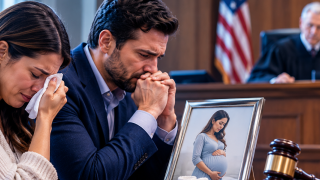
Background of the Wrongful Death Case
…Jury Awards $33.3 Million to Man Seriously Injured by Falling Tree Limb in Sacramento Park
Categories: Premises Liability

Overview of the Verdict
…